Early LLM optimization gives you an advantage because AI search is becoming normal fast. If you build quote-ready content now, you can show up in conversational answers before your competitors do.
LLM SEO is not a replacement for traditional SEO. It is the next stage of it. Traditional SEO still matters, like speed, on-page basics, and solid topic pages. But now you also need content that AI systems can understand quickly, trust, and reuse. If you want a clearer breakdown of what “quote-ready” really means, this LLM SEO guide explains it in a simple way.
Why Does Getting In Early Matter So Much?
Search is moving from “find a page” to “get an answer.” When users ask a question, they increasingly get a summary, a short list, or a step by step response. That changes how brands earn visibility.
The early advantage comes from two things.
First, AI systems learn which sources are consistently helpful. If your site answers common questions clearly, you have a better chance of becoming a source that gets reused again and again. Your competitors can copy one article, but it is harder to copy a full set of clear answers across a whole topic.
Second, content work compounds. One strong page can support many related pages through internal links and consistent definitions. Over time, your site becomes a connected system of answers, not a random set of posts. That is the kind of structure LLMs handle well.
How Does Early LLM SEO Create Long-Term Visibility?
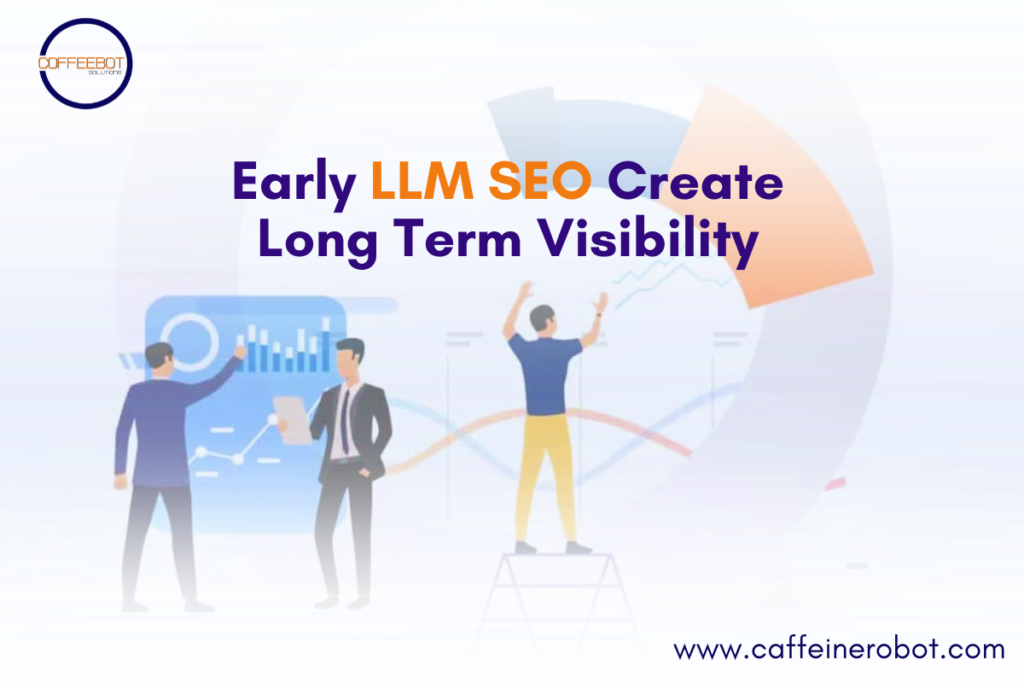
LLM visibility often looks like being quoted inside an answer. Even when a user does not click, your brand can still get seen and remembered.
Early LLM optimization helps you:
- Own the clearest short answer for common questions in your niche
- Build topic clusters that AI can connect easily
- Lower the risk of competitors becoming the default source
- Stay visible even as click traffic becomes less predictable
The key is consistency. If your content uses the same terms for the same ideas and keeps the main answer near the top, AI can reuse it with fewer errors.
What Are Competitors Missing Right Now?
Many businesses are still using old habits. They chase keywords, publish thin content, or write long intros that delay the answer. That kind of writing is harder for AI to reuse.
A lot of teams also skip trust signals. They do not show who wrote the content, when it was updated, or where key facts came from. In an AI-first search world, those gaps can make your content look less reliable.
If you fix clarity and trust now, you are already ahead of a lot of your industry.
What Should You Do First To Build The Advantage?
You do not need to rebuild your whole site at once. Start with a small set of pages that matter most.
A practical plan:
- Pick 5 to 10 high intent topics your audience asks about often.
- Create one strong page per topic with question-based sections.
- Put a 2 to 3 sentence answer at the top of each section.
- Add bullets, examples, and a small FAQ for extra clarity.
- Add basic trust signals like author info, update dates, and sources when needed.
- Link pages together so they support each other.
This approach supports both classic SEO and LLM SEO, without doing extra work that does not pay off.
If you want to connect LLM SEO to what people actually see in AI answers, focus on answer-first formatting. Add one clear “Quick Answer” near the top, use question headings, and write sections that can stand alone as short, accurate responses. Then support each answer with bullets, examples, and simple definitions, so an AI system can quote you without guessing. For a deeper look at how this works and what “answer-ready” content looks like across search and AI tools, here is a straightforward overview of answer engine optimization.
CaffeineRobot Solutions is a results-driven digital marketing agency helping businesses grow through strategic SEO, AI-optimized content, social media marketing, and performance-focused digital campaigns. The agency delivers practical, data-backed strategies that improve visibility, engagement, and long-term growth.