TLDR;
- Web Design and Development
- Search Engine Optimization (SEO)
- Answer Engine Optimization (AEO)
- Social Media Marketing
- Email Marketing
- Paid Campaigns
Building a business today takes more than launching a website or posting on social media. Customers now use search engines, email, AI tools, and more to check out brands before buying. If your business isn’t visible on these channels, you could lose potential customers before they reach out.
That is why digital marketing services matter. They help businesses get noticed online. They build trust, generate leads, and turn interest into sales. For startups and small businesses, the challenge is often knowing where to begin. Some focus only on social media, while others rely only on ads or a website. The best results come from using multiple services that work well together.
This guide highlights key digital marketing services that every business should consider. It also explains why these services work best together in one strategy.
Web Design and Development
What Is Web Design and Development?
Web design and development mean building and updating a business website. Web design is about how a site looks and feels. Web development is about how it works behind the scenes.
A good website should be easy to use. It must be clear and visually appealing. It should also work well on mobile devices. Most importantly, it needs to support business goals like inquiries, bookings, or sales.
Why Your Website Is the Foundation of Digital Marketing
Every digital marketing channel eventually leads people to your website. Most people check your site first. They might find you on Google, social media, email, or through an ad. Then, they decide what to do next. If the website is slow, confusing, or outdated, visitors may leave without converting.
A solid website builds trust for businesses. It shows off services and guides visitors to the next step. A local law firm with a user-friendly website and an easy contact form is more likely to receive consultation requests. In contrast, a firm with an outdated site struggles to attract visitors.
Key Elements of an Effective Business Website
An effective business website should include:
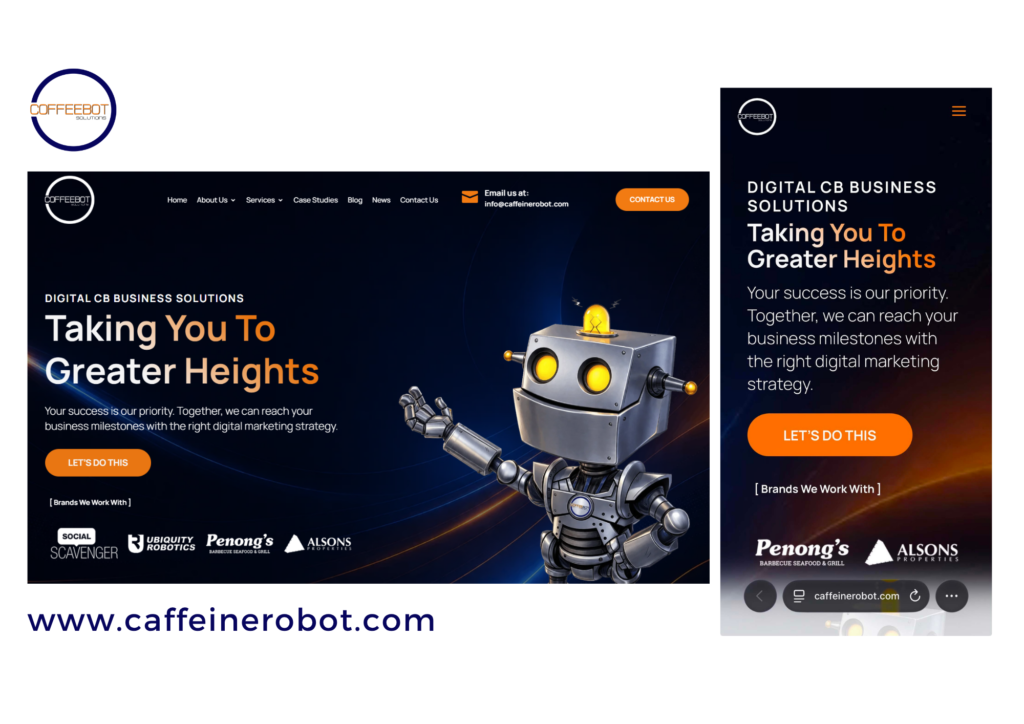
Responsive Design
A responsive website changes to fit various screen sizes. This gives users a smooth experience on desktops, tablets, and mobile devices.
Fast Loading Speed
A fast website improves user experience and helps reduce visitor drop-offs. Speed can be improved by optimizing images, reducing unnecessary code, and using browser caching and CDNs.
Clear Navigation
Visitors should be able to find important information quickly. Organized menus make it easier to access products, services, pricing, contact details, and other key pages.

Strong Calls to Action (CTAs)
Calls to Action encourage visitors to take the next step, such as requesting a quote, booking a consultation, or making a purchase. Every page should guide users toward a clear action.
SEO Readiness
A website should be built with SEO best practices. This includes clean site structure, optimized images, proper headings, metadata, and internal links. These elements help search engines crawl and rank your website more effectively.
Search Engine Optimization (SEO)
What Is SEO?
Search Engine Optimization (SEO) helps your website show up more in search engine results. It improves visibility for relevant queries.
When people search for products or services online, SEO helps your business show up in front of them. This makes it one of the most valuable long-term marketing strategies for attracting qualified traffic.
SEO helps businesses reach people who are already looking for what they offer. That means the traffic is often more relevant and more likely to convert. Unlike paid ads, SEO builds visibility over time and can continue bringing in leads long after the content is published.
How Search Engines Work
Search engines follow three basic processes:
- Crawling – Search engines discover pages by following links across the internet.
- Indexing – Discovered pages are analyzed and stored in searchable databases called indexes.
- Ranking – When someone performs a search, search engines evaluate hundreds of ranking factors. This is done to determine which pages best answer the user’s query.
SEO improves the signals that influence these rankings.
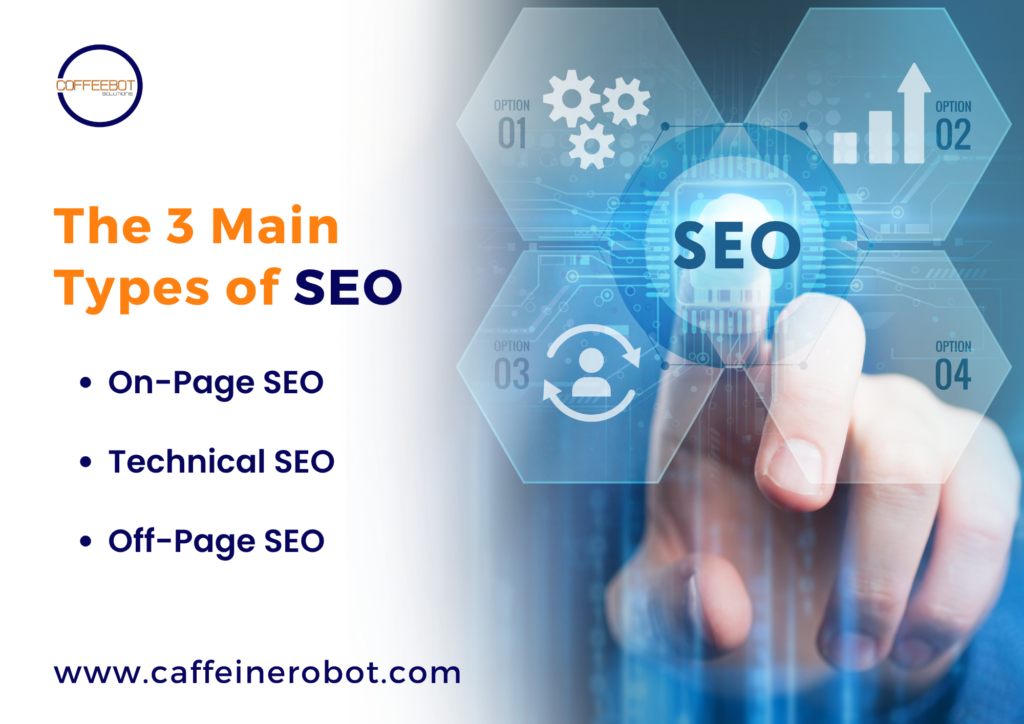
The Three Main Types of SEO
On-Page SEO
On-page SEO means improving content and webpage elements. This helps both search engines and users find what they need. Create great content. Use relevant keywords naturally. Structure pages with clear headings and metadata.
Technical SEO
Technical SEO improves a website’s backend. This helps search engines crawl, index, and understand it better. It involves speeding up the site, making it mobile-friendly, and enhancing security. This all helps provide a better user experience.
Off-Page SEO
Off-page SEO helps boost your website’s authority and credibility outside your site. You can do this by getting quality backlinks, boosting brand mentions, and building your online reputation. These actions tell search engines your website is a trustworthy info source.
SEO helps businesses increase visibility, attract qualified leads, and build trust over time. It is one of the most effective ways to grow organic traffic without depending entirely on ads.
SEO usually takes months to show big results. However, its long-term benefits often outweigh short-term ads.
Answer Engine Optimization (AEO)
What Is Answer Engine Optimization?
Answer Engine Optimization (AEO) is the process of making content that helps AI search tools use your information. This way, they can answer user questions directly.
Instead of presenting users with only a list of websites, AI chatbots increasingly provide direct answers.
Rather than simply ranking high on traditional search results, AEO focuses on becoming part of the answer itself.
How AEO Differs From SEO
While SEO and AEO share the goal of improving online visibility, they optimize content in different ways. The table below highlights their key differences.
| SEO (Search Engine Optimization) | AEO (Answer Engine Optimization) |
| Primary Goal: Rank webpages higher in search engine results | Primary Goal: Provide clear, trustworthy answers that can be featured in AI-generated responses, featured snippets, and voice search |
| Focus: Keywords, backlinks, technical optimization, and search rankings | Focus: User intent, direct answers, content structure, and clarity |
| Content Style: Comprehensive content designed to rank for relevant keywords | Content Style: Well-organized, concise, and easy-to-understand answers to specific questions |
| Success Metric: Higher search rankings and organic traffic | Success Metric: Being selected as the answer by AI tools and search engines |
| Example: A detailed article explaining website security | Example: Question: What is website security?Answer: Website security refers to the measures used to protect websites from cyber threats such as hacking, malware, and unauthorized access. |
Although both strategies complement each other, AEO prioritizes content that is structured logically and easy for both users and AI systems to understand. To improve your AEO strategy, create content that directly answers common customer questions, keep information accurate and well-organized, and use clear headings and formatting. This increases the likelihood of your content being featured in AI-powered search results while also strengthening your overall SEO performance.
Social Media Marketing
What Is Social Media Marketing?
Social media marketing uses platforms like Facebook, Instagram, LinkedIn, TikTok, and X to connect with audiences, build brand awareness, and promote products or services.
It is one of the best ways to show the human side of your business and stay in front of potential customers.
Why Social Media Matters
It gives you a place to share updates, answer questions, and show what makes your brand different. It can also drive traffic to your website and support lead generation.
An effective social media strategy has different content. It informs, engages, and encourages action. Businesses shouldn’t just post promotions. They should share varied content to keep their audience engaged and build stronger relationships over time.
Measuring Social Media Success
Publishing content is only one part of social media marketing. Businesses should regularly check their performance. This helps them see what their audience likes and find ways to improve future campaigns.
Some of the most important social media metrics include:
- Reach measures the number of unique people who saw your content.
- Impressions count the total number of times your content was displayed, including repeat views.
- Engagement Rate measures how often users interact with your content through likes, comments, shares, or clicks.
- Click-Through Rate (CTR) shows the percentage of users who clicked a link after seeing your content.
- Website Traffic tracks the number of visitors driven to your website from social media.
- Lead Generation measures how many potential customers expressed interest by completing actions like filling out a form or requesting a quote.
- Conversions track the number of users who completed a desired action, such as making a purchase or booking a service.
Email Marketing
What Is Email Marketing?
Email marketing is the process of connecting directly with subscribers using tailored email campaigns.
Email lets businesses reach subscribers directly in their inboxes. Unlike social media, where platforms decide who sees your content, email gives you control. This makes email one of the highest-return digital marketing channels available.
Building an Email List
Building an email list means growing a group of people who let your business send them marketing emails. A quality email list has subscribers who truly care about your products, services, or content. This interest means they are more likely to engage with your future campaigns.
Businesses usually grow their email lists using lead capture methods. This includes website forms or downloadable content. A company might offer a free e-book for a visitor’s email address. Or, it could invite customers to subscribe for exclusive updates and promotions.
Types of Email Campaigns
Businesses commonly send:
- Welcome Emails – These introduce new subscribers to the company.
- Educational Newsletters – These share industry insights, tips, and valuable resources.
- Promotional Emails – These announce discounts, new products, or limited-time offers.
- Follow-Up Emails – These continue conversations after inquiries or purchases.
- Automated Email Sequences – Automation sends emails based on customer behavior.
Email marketing helps businesses strengthen customer relationships, nurture leads, and boost repeat purchases. Businesses own their email lists. This lets them reach subscribers directly. They don’t have to depend on shifting social media algorithms.
Paid Campaigns
What Are Paid Campaigns?
Paid campaigns are online advertisements that help businesses reach specific audiences quickly. These can appear on search engines, social media platforms, websites, or video platforms.
Unlike SEO, which takes time to build, paid campaigns can generate traffic and leads soon after launch.

Types of Paid Campaigns
Search Ads
These show up in search engine results when users look for related products or services. They capture purchase intent well. This is because users are already seeking a solution.
Display Ads
Display ads use images and banners that appear across websites and mobile applications. They are commonly used for increasing brand awareness and remarketing.
Social Media Ads
These advertisements appear in users’ social feeds, stories, and video content. Social media advertising lets you target specific audiences. You can focus on their interests, behaviors, demographics, and online activity.
Video Advertising
Video ads appear before, during, or alongside online video content. They are effective for product demonstrations, storytelling, and brand awareness campaigns.
Remarketing Campaigns
Remarketing focuses on users who have visited your website or engaged with your business but didn’t make a purchase. Remarketing campaigns usually get higher conversion rates. This is because these audiences have already shown interest, unlike entirely new users.
Why These Digital Marketing Services Work Best Together
Each digital marketing service plays a different role, but the best results come when they work as one system.
Your website gives people a place to learn more and take action. SEO and AEO help them discover your business through search and AI tools. Social media builds awareness and engagement. Email marketing keeps leads warm and encourages repeat business. Paid campaigns bring in fast traffic and support short-term goals.
Connecting these services gives customers more chances to find, trust, and choose your business.
Grow Your Business with a Complete Digital Marketing Strategy
Digital marketing is not about using one channel well. It is about building a connected system that supports your business at every stage of growth.
A strong website gives your brand credibility. SEO and AEO improve visibility. Social media builds awareness. Email marketing strengthens relationships. Paid campaigns help you reach the right people faster.
For startups and growing businesses, knowing these services is key to creating a lasting online presence. Together, they attract better leads, convert more customers, and help you grow confidently.
Ready to grow your business online? Partner with our team to develop a digital marketing strategy tailored to your goals.
We redefine digital marketing by delivering customized strategies and innovative campaigns tailored to your business’s unique needs. Our team of skilled digital marketers stays ahead of the curve, utilizing data-driven insights and the latest trends to drive impactful results.