When people search for a nearby business, they often choose from the first results they see. This makes search visibility important for attracting new customers. However, having a website or business address doesn’t guarantee a spot in these results.
For businesses serving a specific area, Local SEO plays an important role.
What Is Local SEO and How Does It Work?
Local SEO helps businesses appear in search results for location-based queries. These searches often include a city, neighborhood, or phrase such as “near me.”
For example, someone searching for “Italian restaurant near me” wants to explore nearby dining options.
Local SEO helps Google evaluate:
- What a business offers.
- Where the business operates.
- Whether it matches the searcher’s needs.
- How established and prominent the business is.
Unlike traditional SEO, local optimization places greater emphasis on geographic relevance. It’s especially useful for businesses serving customers within a specific area.
7 Important Local SEO Ranking Factors
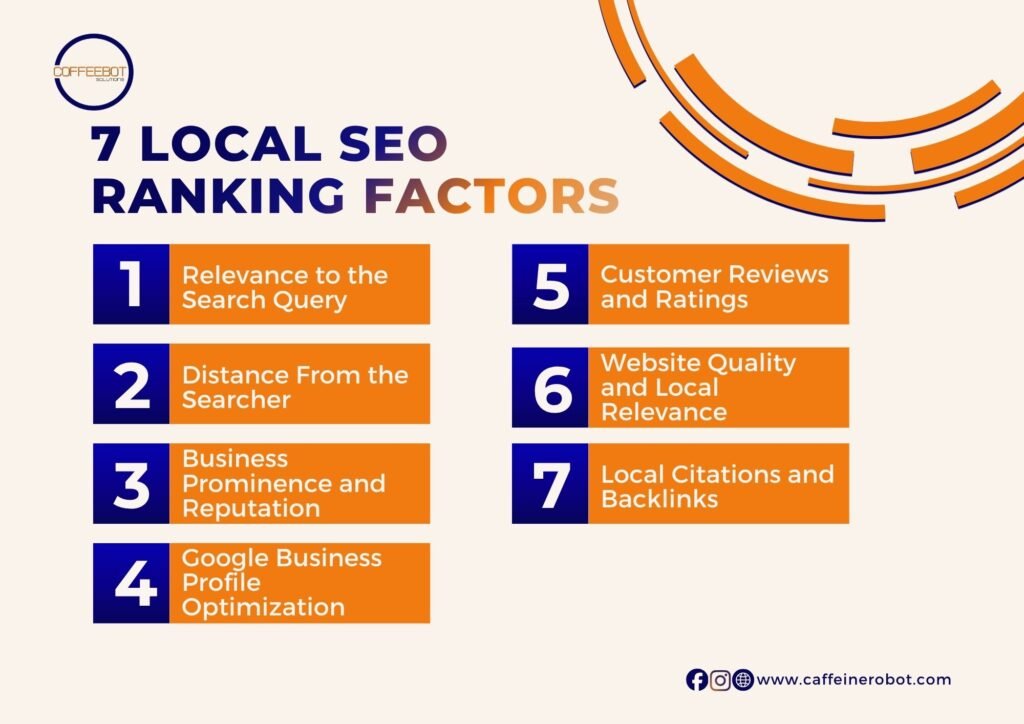
Local SEO is an important part of a digital marketing plan. Google identifies three main factors for local rankings: relevance, distance, and prominence. Several supporting signals also influence local visibility.
1. Relevance to the Search Query
Relevance measures how well a business matches what someone is searching for.
To improve it:
- Choose the category that best describes your business.
- Write a clear description of what you do.
- List the services and products you offer.
- Keep your website content focused on your business.
These optimizations make it easier for your business to appear in searches relevant to your offerings.
2. Distance From the Searcher
Distance refers to how far a business is from the person searching.
Google considers the searcher’s location when displaying local results. A nearby business may appear more prominently for certain queries.
You can’t control where every search originates. However, you can maintain consistent location information.
Make sure your business address and service area are consistent across your website and online listings.
3. Business Prominence and Reputation
Prominence refers to how well-known and established a business is. Google considers factors such as:
- Quality backlinks from relevant websites.
- Online articles and brand mentions.
- Overall business recognition.
A strong online presence can help establish your business as a credible option among local competitors.
4. Google Business Profile Optimization
Your Google Business Profile (GBP) helps Google identify what your business offers. It also provides customers with important information before they visit your website.
A well-optimized profile contains:
- Consistent business name, address, and phone number.
- Correct primary and secondary categories.
- Updated operating hours.
- Relevant products and services.
- High-quality photos.
- A complete business description.
It’s best to check your profile regularly. Outdated or incorrect details can confuse customers and make it harder for them to reach you.
5. Customer Reviews and Ratings
Reviews show people what your business is really like and can influence their decisions. Many people read reviews before choosing a restaurant or local service provider.
Google also notes that the number of reviews and positive ratings can contribute to local prominence.
To manage reviews effectively:
- Encourage customers to leave honest feedback.
- Respond to both positive and negative comments.
- Address customer concerns professionally.
- Avoid buying reviews or offering incentives for positive ratings.
Genuine reviews help build customer trust. They also provide useful feedback about your business.
6. Website Quality and Local Relevance
A well-designed website supports local SEO by offering a smooth and user-friendly experience.
Focus on these website improvements:
| Website Element | What to Improve |
| Mobile usability | Make the website easy to navigate on phones |
| Page speed | Improve loading times |
| Service pages | Clearly explain your services |
| Location pages | Provide useful information about each service area |
| Contact details | Keep business information current |
| Content | Answer common customer questions |
Businesses serving multiple areas may benefit from dedicated location pages. Make each page relevant to its specific area and avoid publishing nearly identical content.
7. Local Citations and Backlinks
These two factors support local SEO in different ways. Local citations mention your business name, address, and phone number in online directories and listings. Backlinks are links from other websites to yours.
Consistent listings make it easier for customers to find your business information across different platforms.
You can earn relevant local backlinks through:
- Community partnerships.
- Local publications.
- Industry organizations.
- Community events.
- Useful local content.
Focus on earning links naturally. Avoid relying on spammy link-building practices.
Should You Hire an SEO Expert?
Hiring an SEO company in Davao is worth the investment if you want to improve your search visibility without handling every optimization task yourself. SEO professionals can identify technical issues, improve your website, and develop strategies to attract relevant traffic.


We redefine digital marketing by delivering customized strategies and innovative campaigns tailored to your business’s unique needs. Our team of skilled digital marketers stays ahead of the curve, utilizing data-driven insights and the latest trends to drive impactful results.