The Way People Discover Information Is Changing
For years, companies have relied on traditional search engine optimization (SEO) to boost their visibility in search results. The goal was straightforward. Rank higher on search engines and earn more website clicks.
Today, that landscape is evolving.
AI platforms now provide answers to users right away, often before they visit a website. Search experiences are shifting from lists of links to a more conversational style. Now, they offer summaries, recommendations, and direct answers to your questions.
This shift is changing how brands earn visibility online.
AI-powered search is growing. Businesses that adapt early can build authority, trust, and discoverability. This will support their long-term growth.
Why Is Search Changing?
The rise of AI-generated answers is transforming the way users find information.
Platforms like Google AI Overviews, AI Mode, ChatGPT, Gemini, and Perplexity are now key for finding information. These platforms summarize information so users don’t need to visit many websites. They provide direct answers right in the search experience.
This means visibility is no longer limited to ranking on the first page of traditional search results.
Brands must now show they are trusted sources. AI systems need to understand, reference, and recommend them.
Businesses that build credibility in new search environments can gain a big edge as AI adoption grows.
What Is Answer Engine Optimization (AEO)?
Answer Engine Optimization, or AEO, optimizes content, website structure, and authority. This helps AI-driven engines understand, reference, summarize, and recommend a brand.
Traditional SEO helps search engines index and rank web pages. In contrast, AEO aims to help AI systems see a business as a reliable source of information.
The goal is not simply to appear in search results. The goal is to become part of the answers users receive.
As search moves to AI-generated answers, businesses need solid content and technical bases. This helps AI systems interpret and trust their information better.
How Is Answer Engine Optimization Different From Traditional SEO?
Traditional SEO is primarily concerned with rankings and organic search traffic.
AEO expands on that foundation by preparing content for AI-powered search experiences.
This means making sure information is clear, well-organized, and backed by signs of expertise and authority.
Businesses should not just focus on keywords and rankings. They also need to think about how AI systems interpret content. AI identifies entities, understands relationships, and decides which sources to cite or recommend.
AEO builds on SEO rather than replacing it.
The Core Components of Answer Engine Optimization
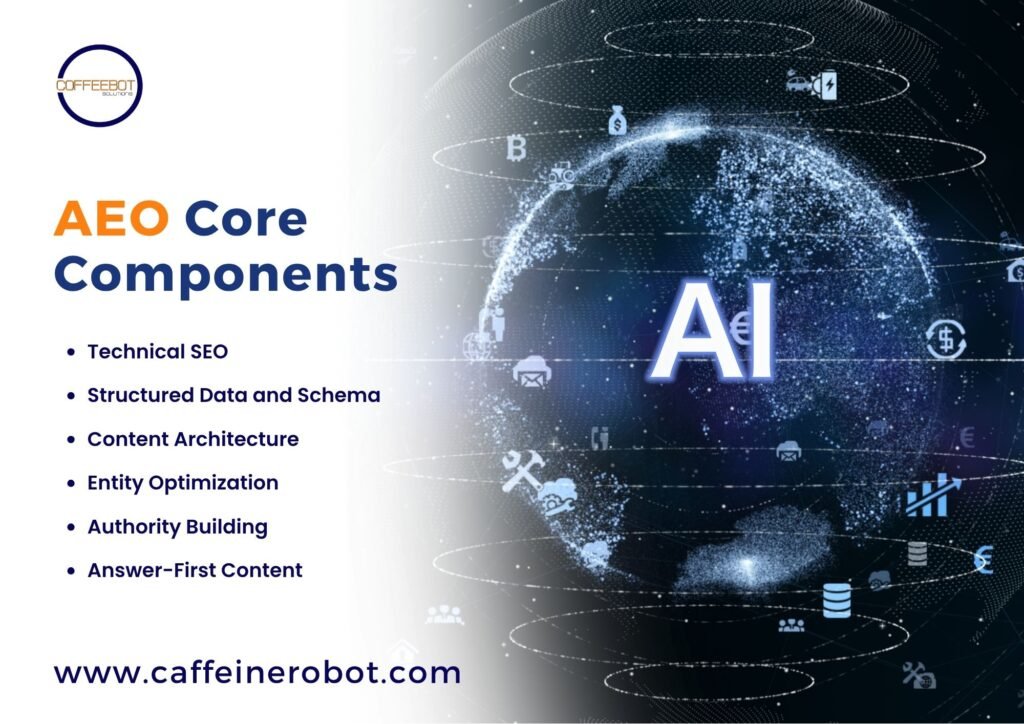
Effective AEO depends on several key elements that work together.
Technical SEO
A strong technical SEO base helps search engines and AI systems access and understand website content easily.
Key areas include:
- Technical SEO audits
A technical SEO audit finds problems that stop search engines from crawling, indexing, or understanding a website.
- Crawl and index optimization
This process helps search engines find key pages easily. It includes them in search results and skips unnecessary or duplicate content.
- Core Web Vitals review
Core Web Vitals assess how users experience a website. They measure loading speed, responsiveness, and visual stability.
- Sitemap and robots.txt management
Sitemaps help search engines find key pages. Robots.txt files tell them which parts of a site to crawl or avoid.
- Canonicalization
Canonical tags tell search engines which version of a page to show. This is useful when several URLs have similar or duplicate content.
- Search Console and analytics setup
Tools like Google Search Console and analytics platforms provide important insights into how well a website performs. They show search visibility, traffic patterns, and possible technical problems.
Without these basics, even great content might not be found, indexed, or understood by search engines and AI search systems.
Structured Data and Schema
Structured data provides context about a business and its content.
Schema helps search engines and AI systems understand important information such as:
- Organizations
Organization schema helps search engines know your company and build its online identity.
This markup can include details like your company name, logo, website, contact info, and social media profiles. Providing this information in a clear format helps search engines and AI systems. They can verify your business and link details about your brand on different platforms.
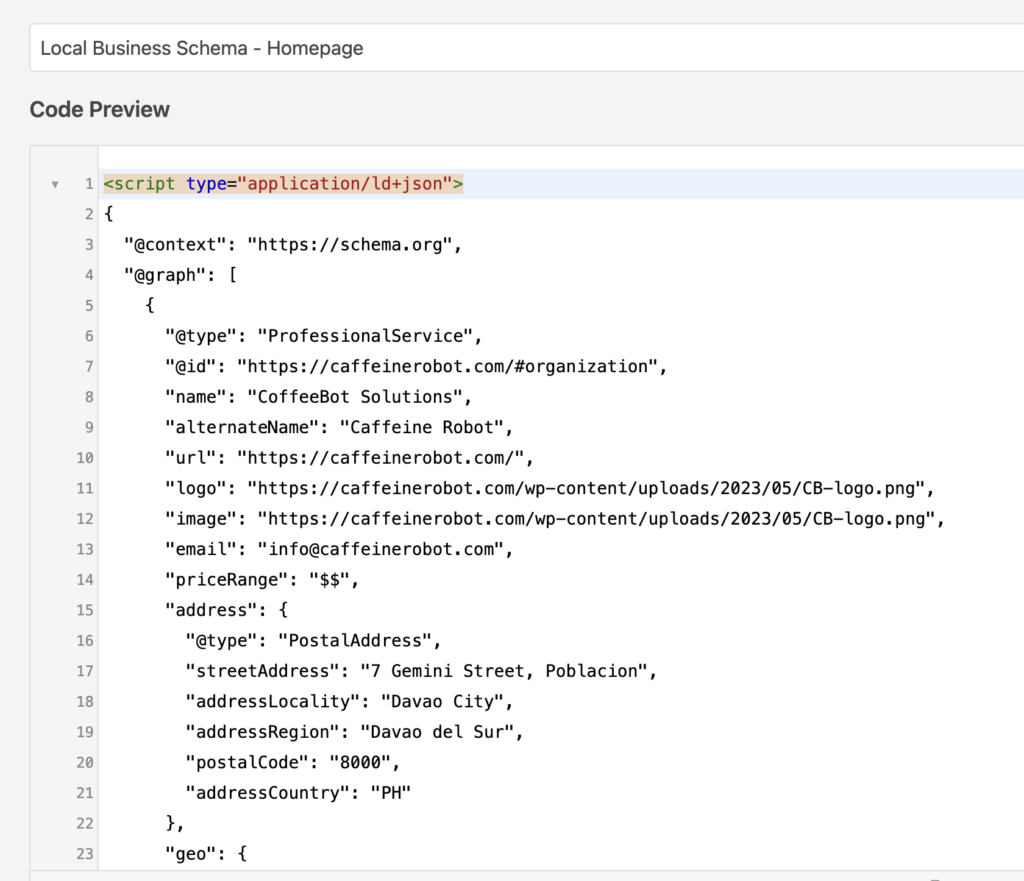
- Local businesses
Local business schema shares key details about businesses in a specific area.
This markup can include details such as business location, operating hours, contact information, service areas, and customer reviews. Search engines use this info to know where a business works and how it helps customers.
- Frequently asked questions
FAQ schema helps identify question-and-answer content on a webpage.
AI-powered search now aims to give direct answers. Good FAQ content helps search engines understand common questions about your products, services, or industry.
- Articles
Article schema helps search engines see that a page has useful content. This includes blog posts, guides, news articles, and educational resources.
This markup gives key details about the content. It includes the headline, author, publication date, and article type. It helps search engines categorize content appropriately and understand its purpose.
- Breadcrumb navigation
Breadcrumb schema helps search engines understand the structure and hierarchy of your website.
Breadcrumbs help users and search engines see how a page fits into the website’s structure.
- Relationships between entities
A key shift in AI-powered search is the focus on entities and relationships.
Entities can include businesses, people, products, locations, services, and concepts. Search engines increasingly attempt to understand how these entities connect to one another.
- Service-related information
Service schema helps explain the specific services a business offers.
Schema markup gives search engines clear details about services instead of just listing them on a webpage.
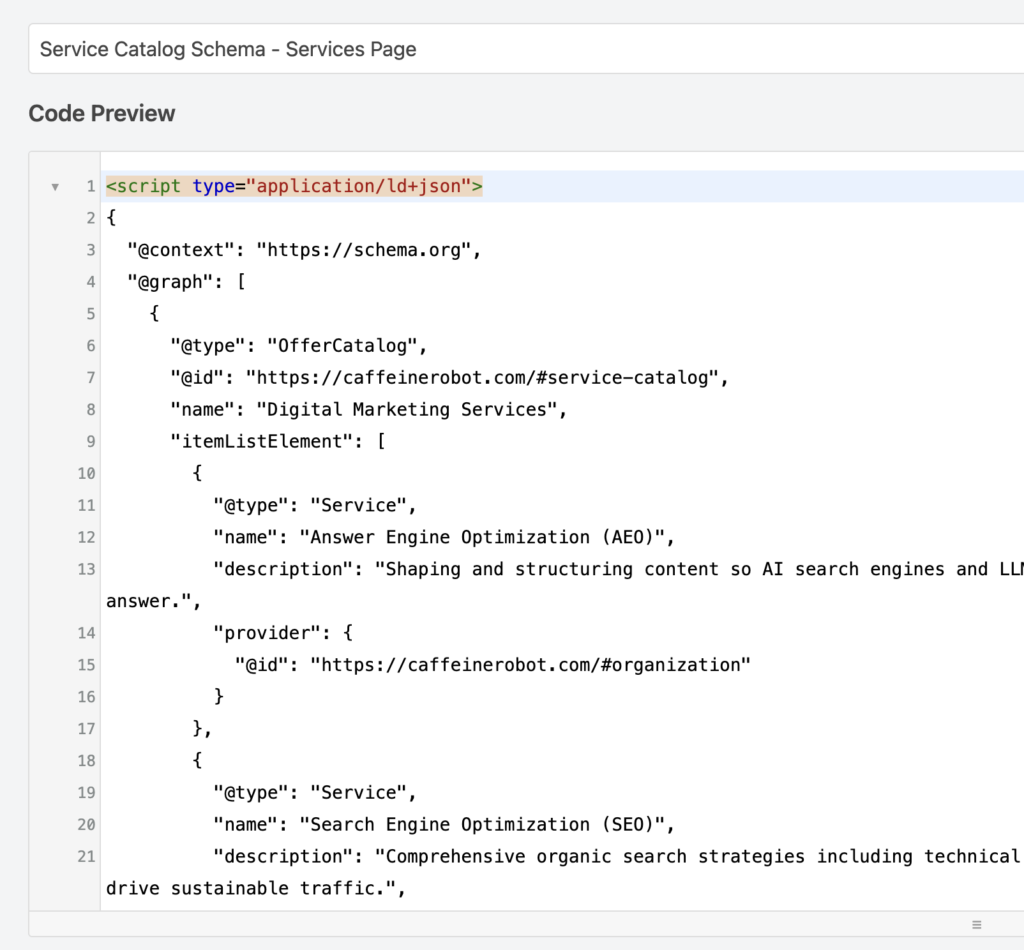
Adding this layer of meaning helps businesses make their content easier for AI systems to understand.
Content Architecture
The organization of information matters.
AI systems must be able to understand how content is connected and how topics relate to one another.
A clear content structure shows expertise. It also helps search engines and AI tools find and understand information on a website easily.
Entity Optimization
AEO goes beyond individual keywords.
AI systems rely more on entities. These include identifiable people, businesses, places, services, and concepts.
Entity optimization helps AI platforms know a brand. It shows what the brand does and how it connects to important industry topics.
This boosts recognition and makes it more likely that a brand will appear in AI-generated answers.
Authority Building
Trust remains a critical factor in search visibility.
AI systems now decide which sources to reference, making authority crucial.
Brands seen as trustworthy sources of information can gain more visibility in AI responses.
Building authority today can contribute to stronger search presence in the future.
Answer-First Content
One of the most important concepts within AEO is answer-first content.
AI-driven platforms are designed to provide users with direct answers. Content that answers questions clearly is easier for these systems to understand and reference.
Answer-first content strategies include:
- Directly addressing user questions
- Using semantic content structures
- Creating logical internal linking systems
- Developing organized content architectures
- Targeting featured snippets
- Optimizing content for AI-generated answers
The clearer and more helpful the content is, the easier it becomes for AI systems to use it as a source.
The transition toward AI-powered search is already underway.
As AI use grows, brands that build trust now could gain more authority later.
The opportunity extends beyond visibility alone.
Businesses that adapt early can strengthen:
- Brand visibility
- Authority
- Trust
- Discoverability
- Long-term growth potential
As search experiences change, being a trusted source for AI is as important as ranking well in traditional search results.
The Future of Search Is About Being the Trusted Source
Search is no longer limited to a list of blue links.
AI-powered platforms are reshaping how information is discovered, summarized, and delivered to users. As these systems grow in influence, businesses need to look past rankings. They should aim to be trusted sources of information.
Answer Engine Optimization represents this next stage of search visibility.
Brands can boost their online presence by blending technical SEO, structured data, authority building, entity optimization, and answer-first content. This helps them get noticed and recommended by AI systems. These systems shape how people find information online.
Businesses that establish this foundation now could gain more visibility, trust, and authority in the future of search.
We redefine digital marketing by delivering customized strategies and innovative campaigns tailored to your business’s unique needs. Our team of skilled digital marketers stays ahead of the curve, utilizing data-driven insights and the latest trends to drive impactful results.